


Simultaneous Construction Work: Water Lance Leak Detection During Geomembrane Installation
Geomembrane leak detection testing is frequently performed while construction work is still underway. For the water lance method, this situation is especially common on large projects, including sites exceeding 15,000 m².
This approach requires close coordination between the leak detection team and the geomembrane installer. To produce high-quality seams, the installer must keep the liner surface as clean and dry as possible. In contrast, the water lance method requires the geomembrane to be wetted to create the conductive medium needed to detect defects.
These two operations are therefore difficult to perform simultaneously within the same work area.
Planning Geomembrane Installation Around Water Flow
Geomembrane installation generally begins at the highest point of the lined area. This sequence allows the water used during testing to flow naturally toward the lowest point.
Proper slope and drainage planning reduces water accumulation and limits the need for continuous pumping in low areas. It also allows leak detection testing to progress without interfering with welding activities elsewhere on the site.
In some cases, an opening is intentionally left in the geomembrane at a low point or drainage ditch to allow water to escape. From the perspective of the water lance method, however, this opening behaves like a large leak.
Reducing Background Noise From a Temporary Opening
An unisolated opening allows electrical current to flow outside the test area. This condition can generate significant electrical background noise and reduce the sensitivity of the survey.
The unwanted signal may:
- mask smaller defects in the geomembrane;
- make field readings more difficult to interpret;
- slow the operator’s progress;
- reduce leak-location accuracy;
- require portions of the survey area to be retested.
The opening should therefore be temporarily isolated before water lance testing is performed in the surrounding area.
A Temporary Method for Isolating a Drainage Ditch
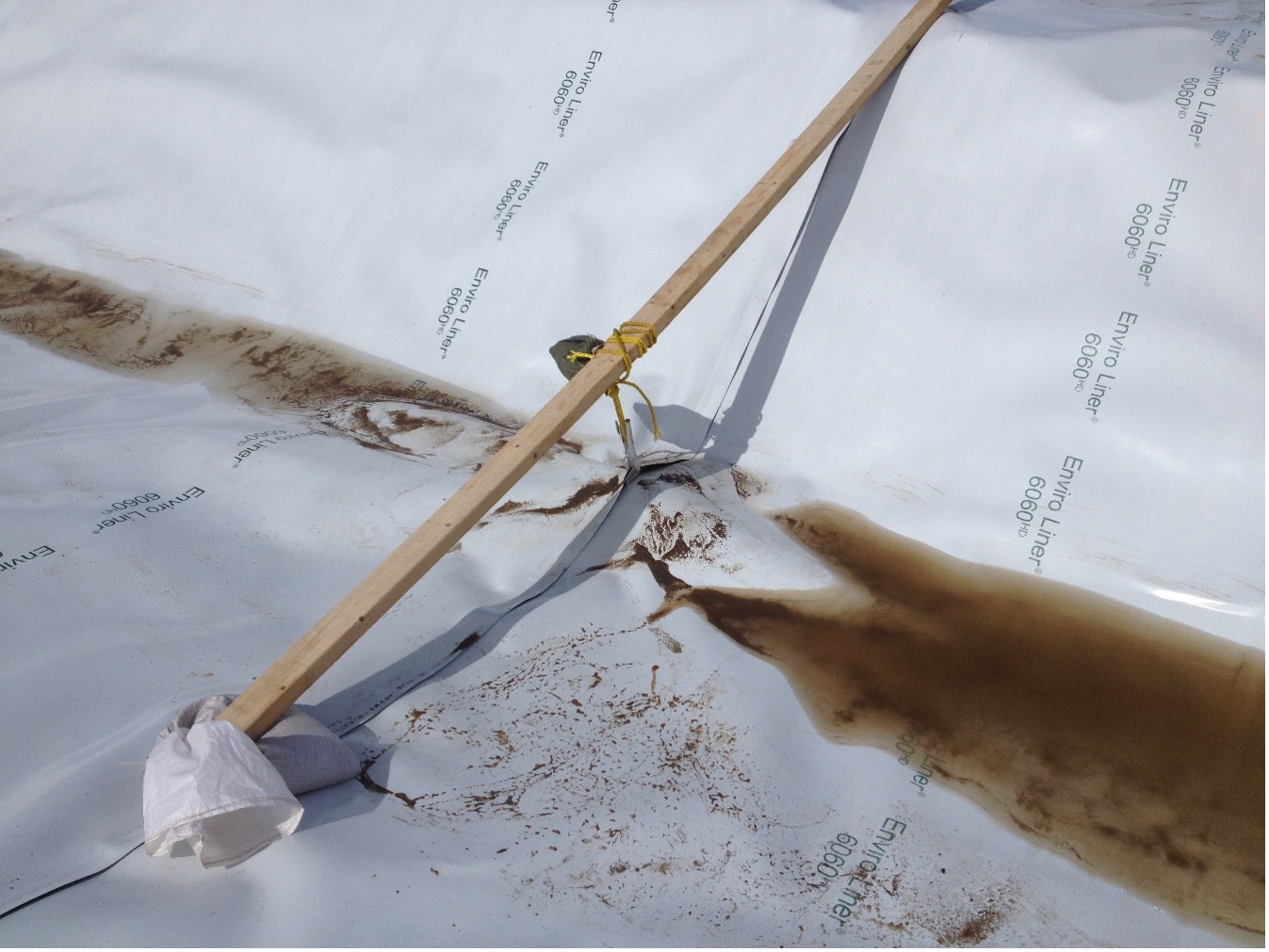
The photo shows a practical solution used to isolate a drainage ditch temporarily during a water lance leak detection survey. Sandbags, a wooden board, rope and a clamp are combined to hold the geomembrane in a position that limits water drainage and electrical current flow.
This temporary arrangement reduces the unwanted signal originating from the ditch and improves the electrical conditions within the survey area. The installation must be adapted to site conditions and completed without puncturing, cutting or otherwise damaging the geomembrane.
Coordinating Testing With Geomembrane Installation
Performing installation and leak detection at the same time requires daily coordination. Testing areas should be clearly defined so the leak detection team can work on a wet surface while the installer continues welding in a separate dry area.
The work sequence should account for:
- the order in which geomembrane panels are installed;
- the direction of water flow;
- the location of low points and drainage ditches;
- the temporary isolation of openings;
- the separation of wet testing areas from dry welding areas;
- water removal or pumping after testing;
- the final repair or closure of temporary openings.
Effective coordination allows construction to continue while maintaining the conditions required for reliable water lance geomembrane leak detection.
