


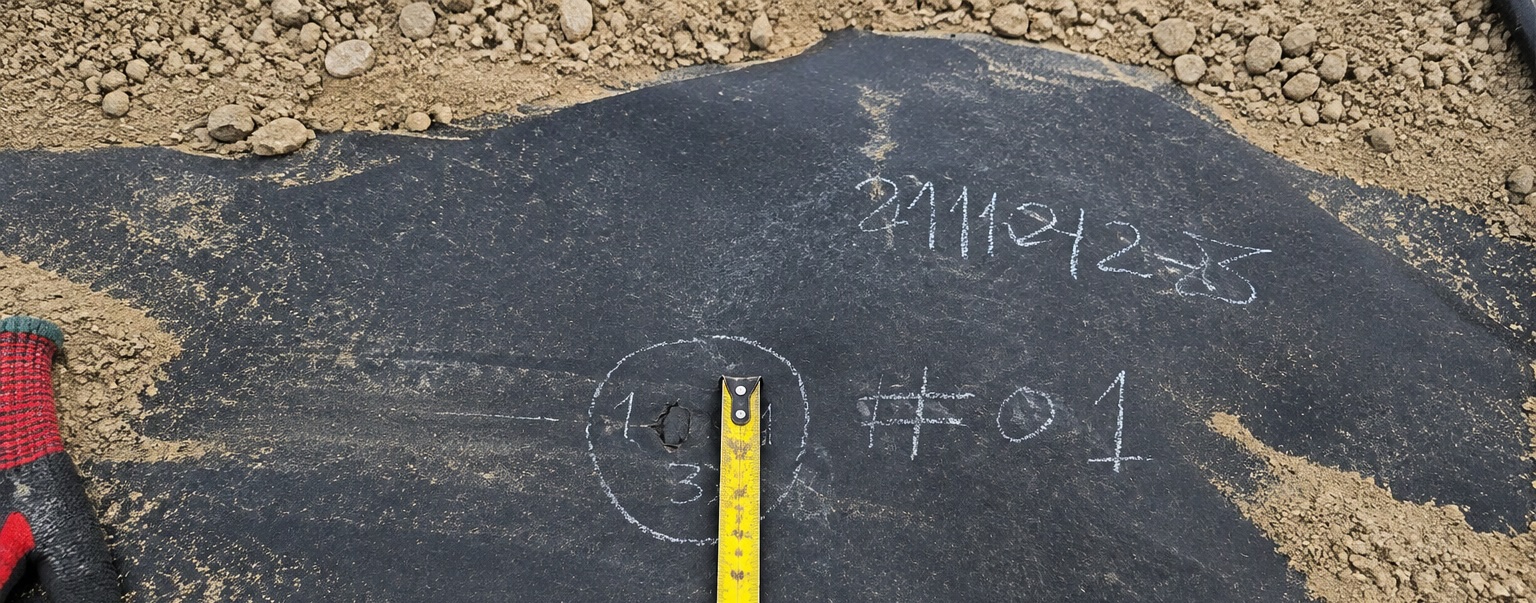
Introduction to Dipole Geomembrane Leak Detection
Dipole leak detection, particularly when performed on a covered geomembrane, is as much an art as it is a science. It represents a pivotal moment when the theoretical principles of electrical leak location meet real-world field conditions.
The dipole method requires a level of discipline that often remains invisible. It involves much more than operating instruments or following a predetermined survey pattern. An effective survey requires sustained concentration, a precise working method and a thorough understanding of the physical principles that control electrical current flow through the cover materials.
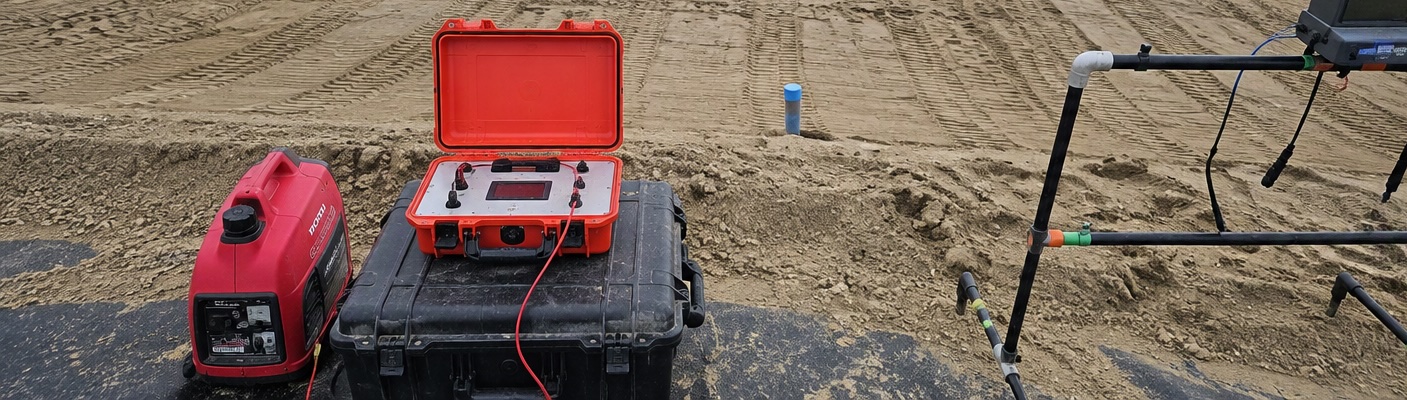
Understanding the Absence of a Signal During a Survey
At the beginning of a technician’s field experience, several projects may be completed without finding a single defect. It is therefore essential to understand a fundamental reality of the profession: detecting no leaks does not mean that the survey was performed incorrectly.
The absence of defects often reflects the high quality of the installation and welding work completed by the contractors. For the person performing the survey, however, the lack of a detectable signal can be frustrating because it provides few opportunities to confirm the interpretation of field measurements in real conditions.
The quality of a leak detection survey should not be measured by the number of leaks found. It should instead be assessed based on the rigor of the testing process, the quality of the electrical conditions and the complete coverage of the survey area in accordance with the established method.
Locating a First Leak With the Dipole Method
Eventually, the equipment responds and a first anomaly is detected. The measurements change in direction or intensity as the operator moves closer to the defect. The investigation then becomes more focused until the leak in the geomembrane can be precisely located.
At that moment, the logic of the dipole leak detection method becomes clear. The readings are no longer simply numbers displayed on a screen or signals produced by the equipment. The data now provide a way to visualize an invisible phenomenon: the path followed by the electrical current toward a defect in the geomembrane.
Learning to Interpret Electrical Current Flow
After locating a first leak, the way the survey area is interpreted begins to change. The measurements become more meaningful, and their interpretation gradually becomes more intuitive.
With experience, the operator learns to recognize:
- signal variations associated with proximity to a defect;
- areas that may contain potential weaknesses;
- the influence of surface conditions and cover materials;
- the preferred paths followed by electrical current;
- the role of moisture and water as conductive media;
- the effects of incomplete electrical isolation around the survey area.
The person performing the survey gradually learns to follow the movement of electrical current through the soil or the materials covering the geomembrane. This understanding improves the ability to distinguish an actual leak from variations caused by site conditions.
From Applying the Method to Understanding the Site
Locating a first leak marks an important stage in learning electrical leak detection. It is the moment when theory, measurements and field observations begin to form a coherent picture.
The operator is no longer simply testing a surface. The operator begins to understand how site characteristics, moisture conditions, cover materials and electrical isolation influence the results of a dipole survey on a covered geomembrane.
This experience gradually transforms the interpretation of field data. Geomembrane leak detection then becomes a true reading of the site, grounded in method, concentration and practical experience.
