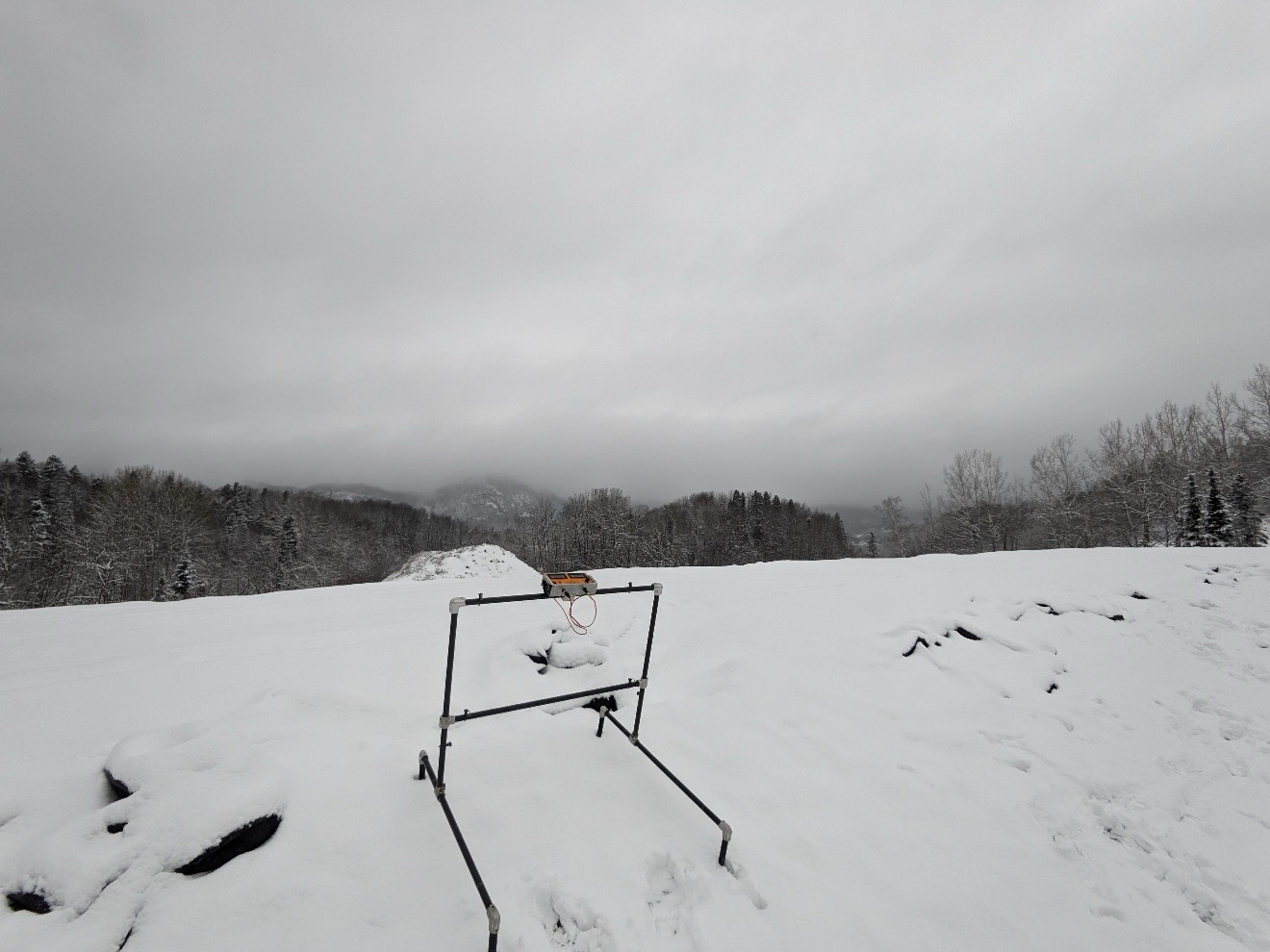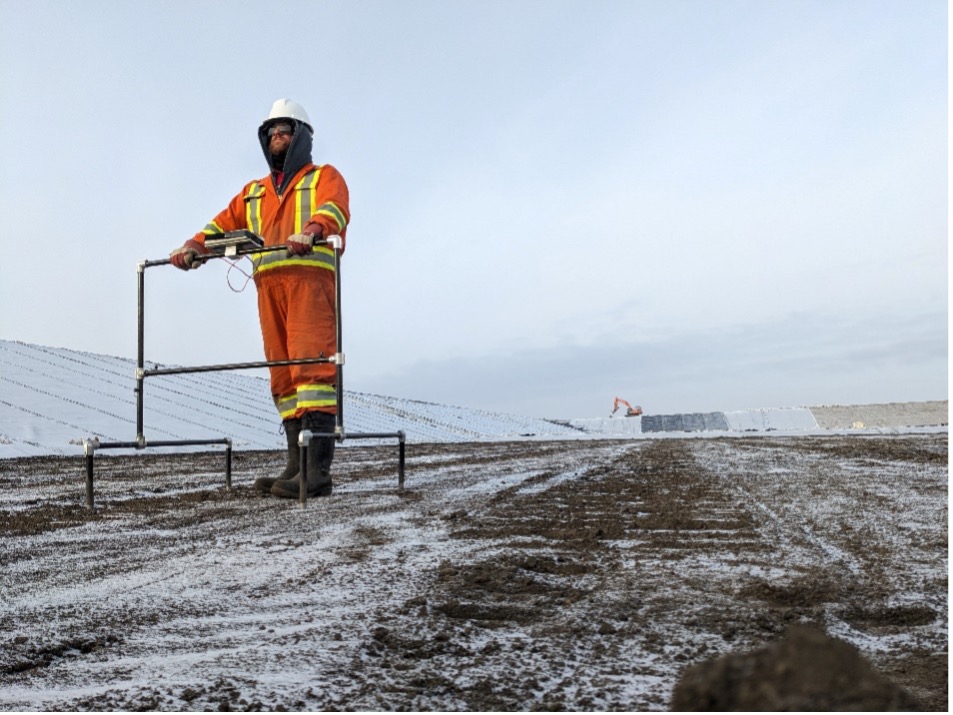
Geomembrane Leak Detection at the Start of the Winter Season
Electrical leak detection on geomembranes relies on one fundamental principle: the material above the geomembrane must be sufficiently conductive to allow electrical current to flow. Frozen soil has very low electrical conductivity and can therefore compromise the effectiveness of all electrical leak detection methods.
Every year, some projects are delayed until the beginning of the winter season. As temperatures decrease, the ground begins to freeze overnight and gradually remains frozen for longer periods.
In some cases, field crews can wait for sunlight to warm and thaw the ground surface before testing begins. However, this approach significantly reduces the daily operating window. Once the ground remains frozen throughout the day, the leak detection survey will generally need to be suspended and postponed until the following year.
Why Does Frozen Ground Affect Electrical Leak Detection?
Electrical leak detection methods require a conductive medium so that electrical current can travel toward defects in the geomembrane.
When the soil or cover material is frozen, its electrical conductivity decreases significantly. Electrical signals become more difficult to measure, potentially reducing the ability to locate leaks accurately. Freezing conditions can therefore affect both the reliability and productivity of a geomembrane leak detection survey.
Preventing Water Hoses From Freezing
During the transition into winter, water hoses must be drained as thoroughly as possible at the end of each workday. Ideally, the hoses should also be stored overnight in a heated location.
This precaution applies to hoses used for the water lance method, as well as those used to wet the surface during a dipole leak detection survey.
Residual water can freeze inside the hoses and form ice blockages. Clearing frozen hoses requires considerable time and effort, reducing crew productivity and further shortening an already limited operating window.
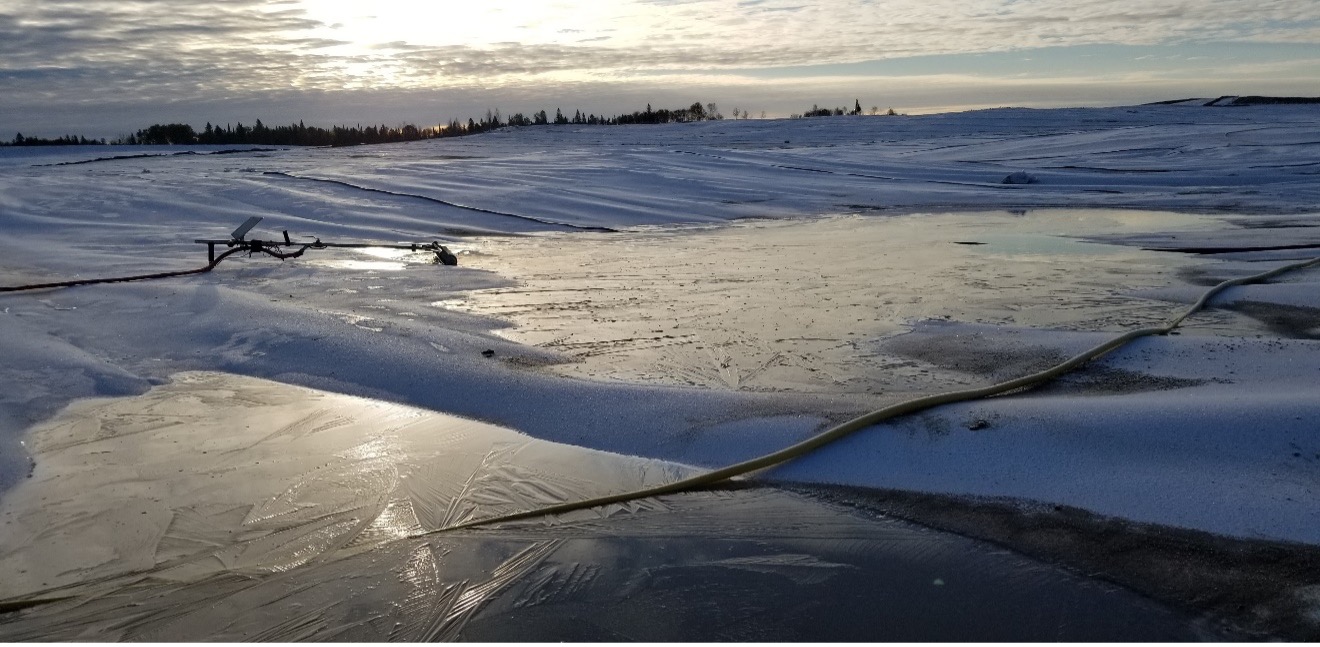
Planning Leak Detection Work Before Freeze-Up
When freezing conditions begin, additional measures are often implemented to accelerate testing and complete the leak detection survey before winter conditions make the work impossible.
Effective planning should account for:
- daytime and nighttime temperatures;
- the condition of the soil or cover material;
- available daylight and direct sunlight;
- hose drainage and storage procedures;
- access to a heated storage area;
- the time required to complete the remaining survey area.
Monitoring weather conditions and protecting equipment properly can help maximize the number of productive working hours. Despite these precautions, winter geomembrane leak detection may become impossible once the ground remains frozen throughout the day.