


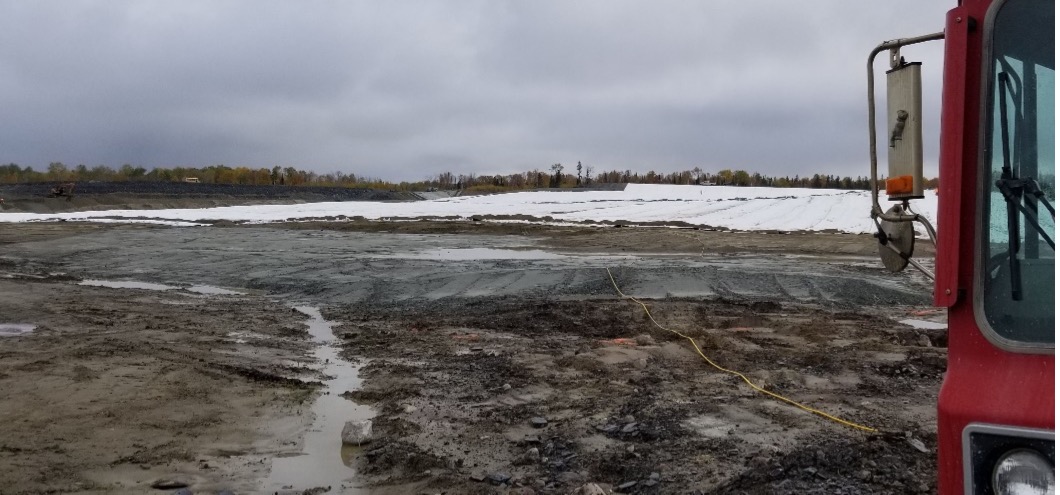
Equipment Required for an Effective Geomembrane Leak Detection Survey
Each geomembrane leak detection method requires specific equipment. Most specialized testing instruments are supplied by the leak detection company; however, some equipment is too large or cumbersome to transport efficiently between job sites.
For the water lance method, water hoses are required to perform the survey. On local projects in Québec, we normally provide the hoses, regardless of the length needed. When air travel is required, however, the client must supply suitable hoses at the project site.
For the dipole method, the main logistical consideration is usually the availability of a gasoline-powered generator. Both methods also frequently require a reliable water supply, such as a water truck or a storage tank equipped with a pump.
Common Issues with Client-Supplied Equipment
The following equipment-related issues are among the most common causes of delays during a geomembrane leak detection survey:
1. Hoses That Are Too Short
Short hoses require multiple connections. These couplings frequently catch on geomembrane seams and make it more difficult to move the equipment efficiently across the liner.
Using longer hose sections reduces the number of connections, improves mobility and helps prevent unnecessary interference with the geomembrane welds.
2. Hoses That Are Too Large
The ideal hose diameter is generally between ½ inch and ⅝ inch. On some projects, however, only 1½-inch or even 2-inch hoses are available.
Once filled with water, hoses of this size become extremely heavy and difficult to handle. This can significantly slow down the field crew and reduce the efficiency of the leak detection survey.
3. Insufficient Pump Capacity
Under normal conditions, almost any submersible or external water pump can provide adequate flow. Higher pump capacity may be required when the project involves a substantial elevation difference or a long hose run, such as approximately 400 metres.
The pump must provide enough pressure and flow at the end of the hose, not only at the pump outlet. Elevation gain, hose diameter, hose length and the number of fittings can all contribute to pressure loss.
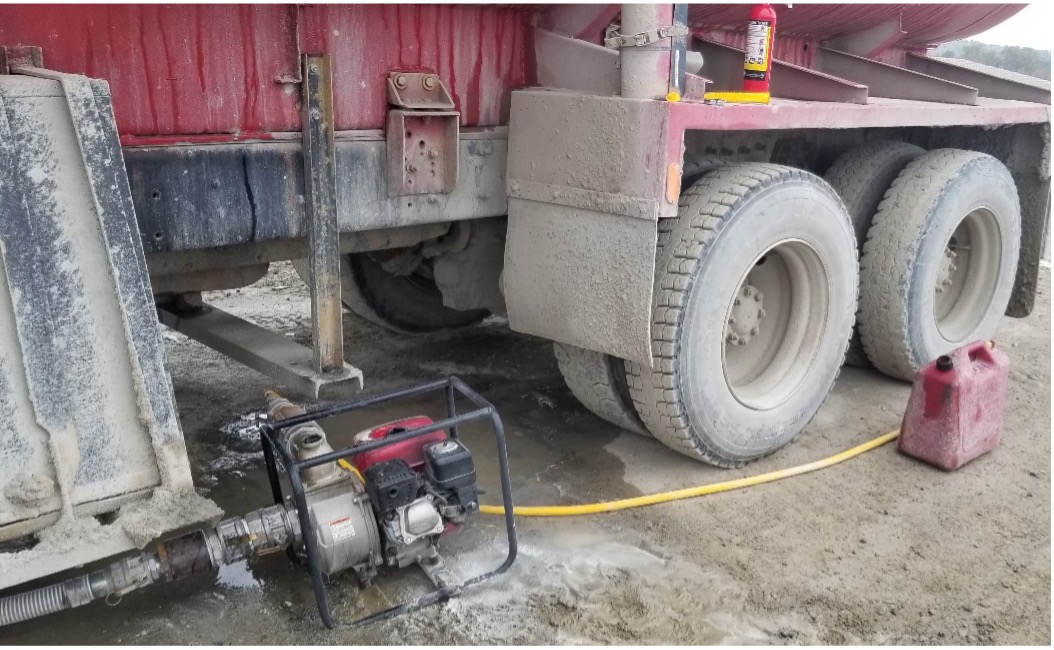
Proper Equipment Planning Prevents Delays
When unsuitable equipment is supplied, adjustments must be made at the beginning of the project. Replacing hoses, changing fittings or locating a more powerful pump can delay field operations and result in additional costs.
Confirming the required hose diameter, hose length, pump capacity, water source and generator availability before mobilization helps ensure an efficient geomembrane leak detection survey and reduces the risk of avoidable delays.
