


Equipment Checks Before a Geomembrane Leak Detection Survey
Before beginning a geomembrane leak detection survey, systematically checking the equipment is not optional. It is an essential step in ensuring reliable test results and avoiding the need to inspect the same area more than once.
An incorrect connection, damaged wire or weak battery may go unnoticed after the survey has started. The system may appear to operate normally even though the leak detection process is partially or completely ineffective.
Careful equipment handling and rigorous setup procedures help prevent interruptions and lost time during fieldwork. A productive day therefore begins with testing the batteries, wires, connections and the entire electrical circuit.
Complete a Full Inspection Before Testing
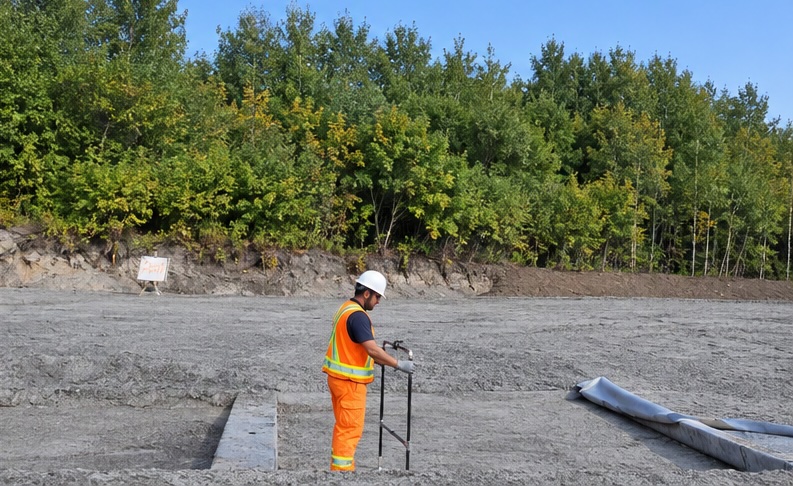
A visual and functional inspection of the equipment should be completed before testing begins. The inspection should include:
- battery condition and charge level;
- electrical continuity of wires and cables;
- cleanliness and security of all connections;
- condition of electrodes and connectors;
- operation of the measuring instruments;
- continuity of the electrical circuit;
- correct positioning of the equipment;
- general site conditions.
A preliminary site inspection can also identify conditions that may interfere with the survey, including unisolated openings, external ground connections, insufficiently moist materials or obstacles restricting access to certain areas.
Why Can a Connection Error Go Unnoticed?
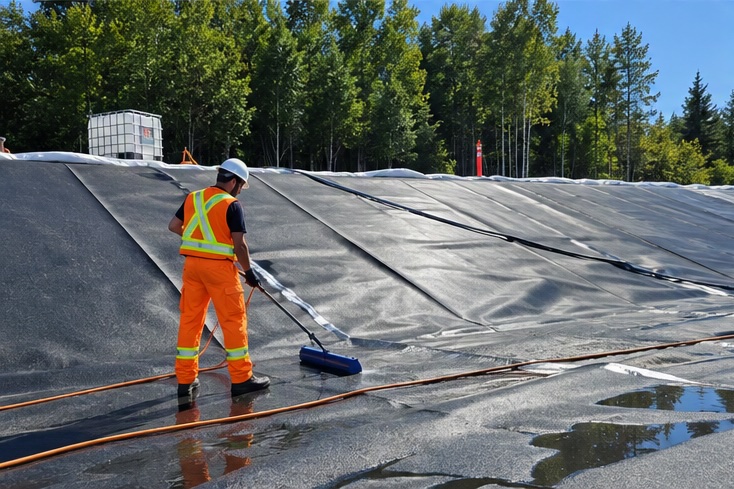
During a water lance leak detection survey, the equipment and some electrical connections may become difficult to access after testing begins. The geomembrane surface is progressively wetted while the field operator follows a systematic survey pattern.
When no leaks are encountered, the system does not produce a distinctive signal. This silence may indicate that the geomembrane is completely watertight, but it may also result from a broken electrical circuit or a defective connection.
Without a control test, it can be difficult to distinguish between a defect-free geomembrane and a leak detection system that is not operating correctly.
Check the Electrical Circuit Regularly
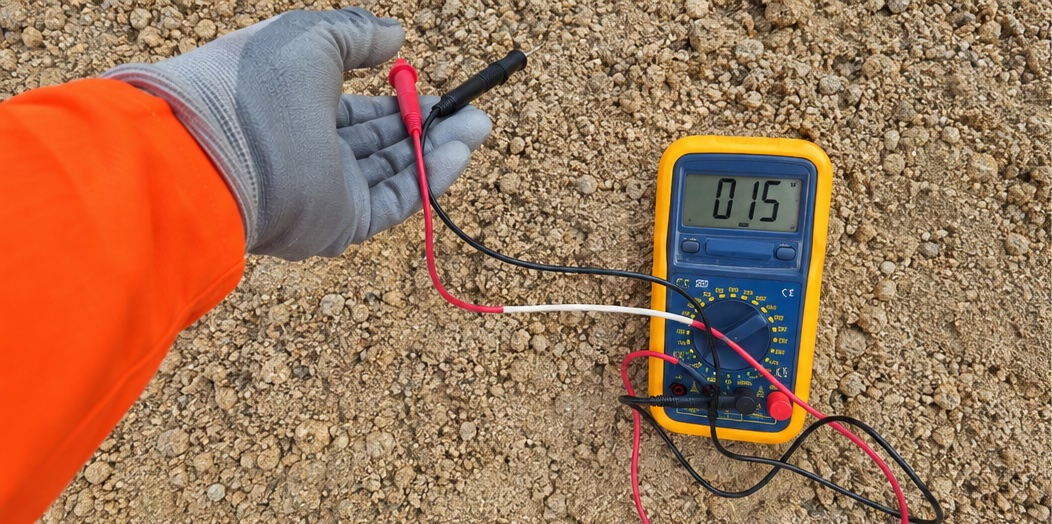
Electrical circuit continuity should be confirmed before testing begins and checked regularly throughout the survey. This procedure verifies that current is still flowing correctly and that the system remains capable of detecting a defect in the geomembrane.
The frequency of the checks should reflect site conditions, the size of the survey area and the accessibility of the electrical connections. An additional system check is particularly important after:
- moving a cable or electrode;
- interrupting the survey;
- entering a new testing area;
- vehicle or equipment traffic near the wires;
- changing the electrical configuration;
- observing an unusual reading or an extended period without a signal.
Depending on the test method and system configuration, these checks may be completed with a multimeter or through a validation procedure involving a known test defect.
Consequences of a Failed Control Test
If an electrical circuit check fails, the entire area inspected since the last successful test must be considered unverified.
The affected area must be tested again after the cause of the problem has been identified and corrected. Depending on the surface area already covered, repeating the survey can add several hours of fieldwork and disrupt the construction schedule.
Regular system checks limit the amount of surface that must be retested if a failure occurs. These checks also reduce the risk of leaving a defect undetected because of an equipment problem rather than the actual condition of the geomembrane.
Test Regularly and Survey Only Once
An effective leak detection survey follows one simple principle: test the equipment regularly so the geomembrane only needs to be surveyed once.
A few minutes spent checking the batteries, wires, connections and electrical circuit can prevent an entire survey area from having to be retested. The quality of a geomembrane leak detection survey depends not only on the method applied to the liner, but also on the reliability of the equipment used to perform the testing.
