


Unmonitored Project: Deficient Geosynthetic Installation
Certain geosynthetics, including geotextiles, may be installed by general contractors with the appropriate experience and equipment. This can also apply to bituminous geomembranes, whose installation techniques differ from those used for polymeric geomembranes.
For other types of containment liners, including PVC, LDPE and HDPE geomembranes, specialized installers are essential. These systems require deployment, welding and testing procedures suited to the material properties and project specifications.
Improper installation can compromise the containment system even when the geomembrane itself meets the specified requirements.
Installer Quality Control Does Not Replace Independent Quality Assurance
Specialized installation companies generally maintain their own geosynthetic installation quality-control procedures. This internal quality control is necessary, but it does not guarantee that every error or omission will be identified.
Under schedule pressure, certain steps may be completed too quickly, inadequately documented or, in rare cases, omitted to accelerate construction. Independent third-party verification therefore remains essential.
Construction quality assurance, commonly referred to as CQA, confirms that the materials and installation procedures comply with the approved drawings, specifications and project requirements.
Required Checks During Geomembrane Installation
Construction monitoring should cover every critical stage of the installation. Depending on the geomembrane material and project requirements, the quality-assurance program should verify:
- subgrade preparation and acceptance;
- geomembrane roll identification and compliance;
- material handling and storage conditions;
- panel deployment;
- weather conditions during installation;
- welding-equipment calibration;
- trial-seam completion;
- welding parameters;
- visual seam inspection;
- nondestructive seam testing;
- destructive sample collection and testing;
- defect repairs;
- documentation and traceability of the results.
These checks help identify problems before the geomembrane is covered, while repairs remain accessible and relatively straightforward.
Welding-Equipment Calibration and Trial Seams
Welding equipment must be adjusted according to the geomembrane material, liner thickness and environmental conditions. Geomembrane temperature, wind, moisture and welding speed can all affect seam quality.
Trial seams should be completed before production welding begins and whenever a significant change occurs, including a change in weather conditions, equipment or operating parameters, or following an extended interruption.
The trial samples confirm that the selected parameters can produce an acceptable seam before welding continues on the containment system.
Nondestructive and Destructive Seam Testing
Nondestructive testing verifies seam continuity without damaging the geomembrane. Depending on the joint configuration and liner material, the methods may include:
- air-pressure testing of dual-track fusion seams;
- vacuum-box testing;
- inspection with a blunt probe;
- other methods approved by the project specifications.
Destructive testing evaluates the mechanical strength of the seams. Samples are removed from selected locations and tested for peel and shear performance.
A seam may appear acceptable during a visual inspection while still containing insufficient bonding, an open channel or a mechanical weakness. Visual inspection cannot therefore replace the testing specified in the construction quality-assurance program.
Leak Detection on an Exposed Geomembrane
An exposed geomembrane leak detection survey provides an effective additional level of quality assurance. It can locate very small defects that may be difficult or impossible to identify visually.
These defects may include:
- small punctures;
- cuts;
- tears;
- isolated panel defects;
- unwelded areas;
- deficient seam terminations;
- incomplete repairs.
Leak detection does not replace the installer’s quality control or independent construction quality assurance. These three levels of verification are complementary and collectively reduce the risk of defects remaining in the system before covering and commissioning.
Consequences of Installation Without Adequate Oversight
Geosynthetic installation and inspection require specialized knowledge. Poor project management, insufficient oversight and incomplete quality-control procedures can result in a facility that cannot be placed into service.
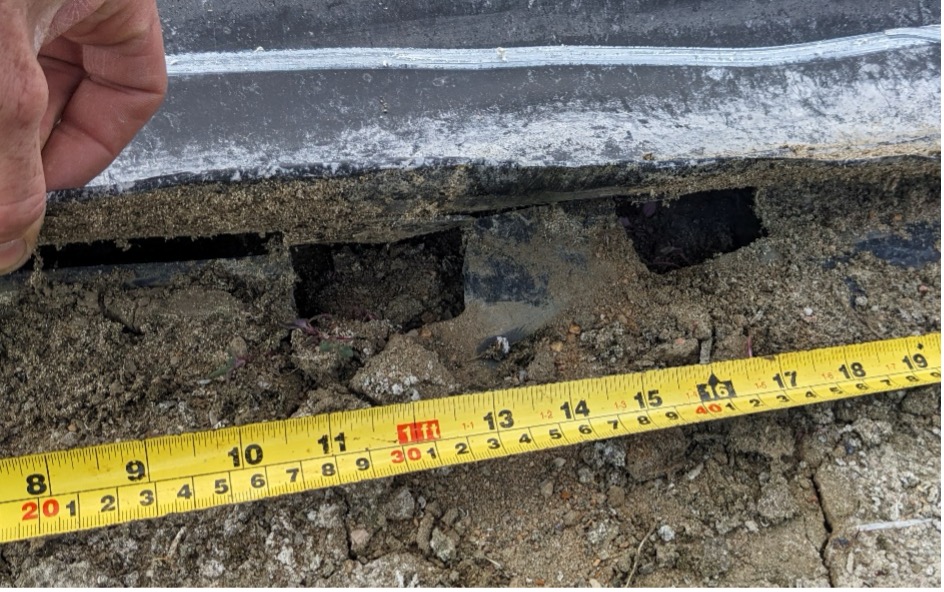
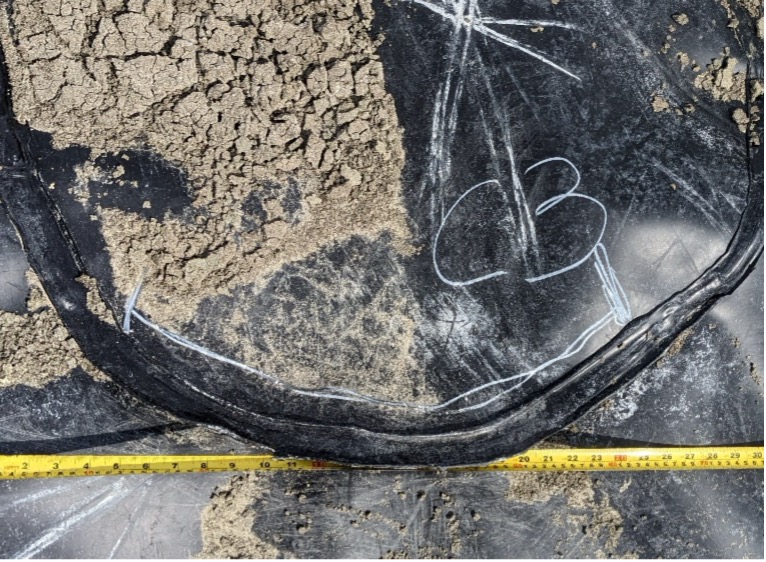
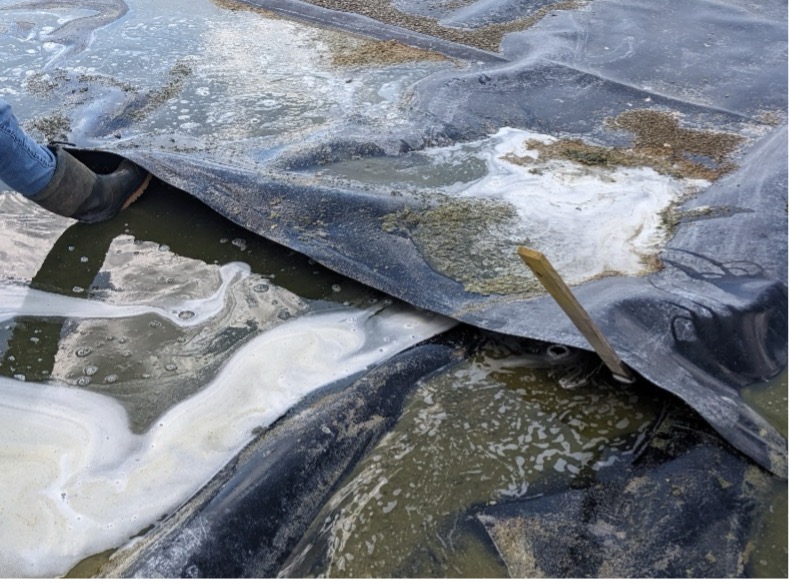
The photographs show a project involving tens of thousands of square metres of geomembrane that was never commissioned. A visual inspection of a small portion of the site by an experienced technician quickly identified dozens of defects.
One opening was approximately four metres long. A failure of this size cannot be considered a minor or difficult-to-detect defect. It indicates a significant breakdown in the installation, inspection and work-acceptance processes.
Preventing Geomembrane Failure Before Commissioning
To reduce the risk of deficient installation compromising an entire project, responsibilities should be established before construction begins. The quality-assurance program should define:
- installer qualification requirements;
- deployment and welding procedures;
- the frequency of equipment calibration and trial seams;
- nondestructive testing methods;
- the frequency and location of destructive tests;
- seam-acceptance criteria;
- repair and retesting procedures;
- documentation requirements;
- conditions for final geomembrane acceptance;
- the leak detection method to be performed before covering.
Independent construction monitoring and geomembrane leak detection represent a limited investment compared with the costs of repairing a defective liner, removing cover materials or being unable to place a facility into service.
